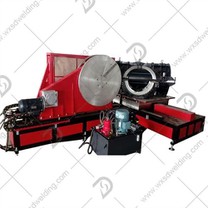
1. Preparation before welding
1. Equipment inspection
Check the appearance of the welding machine: Check whether the overall appearance of the welding machine is damaged, such as whether the shell is cracked or deformed, whether the welding head has loose or damaged parts, etc.
Check the electrical system: Check whether the power cord is intact, whether the plug can be inserted into the socket normally and has good contact. Turn on the power switch of the welding machine, check whether the power indicator light is on, and observe whether there is any abnormal sound or smell inside the welding machine. If an electrical fault is found, stop using it immediately and repair it.
Check the gas protection system (if it is gas shielded welding):
Check whether the pressure of the gas cylinder is sufficient. Generally, the pressure of the argon gas cylinder should not be lower than the specified minimum working pressure (usually 0.5-1MPa).
Check whether the pressure reducing valve is working properly, whether the adjustment knob is flexible, and adjust the output pressure of the pressure reducing valve to the appropriate range (generally 0.2-0.4MPa according to the welding process requirements).
Check whether the reading of the flow meter is accurate and whether the gas pipe is damaged or leaking. You can check whether there is leakage by applying soapy water to the air pipe joint and other parts. If bubbles are generated, it means leakage.
Check whether the nozzle of the gas shielded welding is blocked or damaged. If it is blocked, it needs to be cleaned with special tools. The damaged nozzle should be replaced in time.
Check the clamp system:
Check whether the clamping mechanism of the fixed clamp and the movable clamp (if any) is flexible and can clamp and loosen the hydraulic pipe normally. By adjusting the handle or knob on the clamp, test whether the clamping force is uniform and can meet the clamping requirements of hydraulic pipes of different diameters.
Check whether the positioning device of the clamp is accurate, ensure that the hydraulic pipe can be correctly positioned in the clamp, and ensure that the axis of the pipe is aligned for high-quality welding.
2. Material preparation and cleaning
Pipe inspection: Confirm whether the material and specifications (pipe diameter, wall thickness, etc.) of the hydraulic pipe meet the welding requirements, and check whether there are obvious defects on the surface of the pipe, such as cracks, sand holes, etc. Pipes that do not meet the requirements should be replaced.
Pipe cleaning:
Remove oil stains from the welding parts of the hydraulic pipe, and wipe them with organic solvents (such as acetone, alcohol, etc.). Dip a clean cloth in an appropriate amount of organic solvent and gently wipe the welding area until the oil stains are completely removed.
To remove rust and scale, sandpaper, wire brushes and other tools can be used for grinding. When grinding, pay attention to uniform force to make the metal surface of the welding area shiny, and avoid excessive grinding to reduce the wall thickness of the pipe.
The cleaned pipe should be welded as soon as possible to avoid re-contamination. If welding cannot be done immediately, protective measures should be taken, such as covering with plastic film.
3. Welding parameter setting
Determine the welding process: According to the material, wall thickness and use requirements of the hydraulic pipe, select a suitable welding process, such as TIG welding (tungsten inert gas shielded welding), MIG welding (molten inert gas shielded welding), etc. Different welding processes require different parameters.
Set welding parameters:
Current and voltage (arc welding): For TIG welding, set a suitable welding current according to the wall thickness and material of the pipe. Generally, for hydraulic steel pipes with a wall thickness of 1-3mm, the welding current can be set between 80-150A. For MIG welding, in addition to the current, the welding voltage must also be set. The current and voltage must match each other to ensure the stability of the welding process and the quality of the weld. You can refer to the welding process manual or conduct trial welding to determine the best parameter settings.
Welding speed: The welding speed affects the formation and quality of the weld. Generally speaking, too fast a welding speed will lead to defects such as insufficient weld penetration and lack of fusion, while too slow a speed will make the weld too wide and overheated. According to the diameter and wall thickness of the pipe, the welding speed should be set reasonably, usually between 5-15cm/min.
Wire feeding speed (MIG welding): If it is MIG welding, the wire feeding speed should be set according to the diameter of the welding wire and the welding current. The wire feeding speed should be adapted to the welding current to ensure that the welding wire can be filled into the molten pool in a timely and stable manner. It can be set by adjusting the wire feeding speed knob on the wire feeding mechanism, and the wire feeding speed can be adjusted by observing the weld formation during the trial welding process.
Gas flow (gas shielded welding): For gas shielded welding, it is crucial to set the appropriate shielding gas flow. Taking argon protection as an example, the general flow rate is set between 8-15L/min to ensure that the welding area can be effectively covered by the protective gas to prevent air from entering the molten pool and affecting the quality of the weld.
2. Welding process
1. Pipe fixing and positioning
Place the cleaned hydraulic pipe in the clamp system, adjust the clamping force of the clamp according to the pipe diameter of the pipe, and fix the pipe firmly on the workbench. Through the positioning device of the clamp, ensure that the axes of the two hydraulic pipes to be welded are aligned, and the welding parts are tightly fitted (if it is butt welding) or in a suitable welding position (such as other welding forms such as socket welding).
2. Gas protection (gas shielded welding)
If it is gas shielded welding, open the gas cylinder valve before starting welding, adjust the pressure reducing valve to stabilize the output pressure at the set value, and then turn on the gas flow meter to adjust the gas flow to the preset value. Observe the gas sprayed from the nozzle to ensure that the gas can evenly cover the welding area to form a good protective atmosphere.
3. Start welding
TIG welding operation: Press the start button of the welding power supply, bring the tungsten electrode (electrode) close to the welding part of the hydraulic pipe, and generate an arc between the tungsten electrode and the pipe. Maintain a suitable arc length (generally 2-4mm), and move the welding head along the welding part according to the set welding speed to make the molten pool move forward evenly. During the welding process, pay attention to the state of the molten pool, which should be bright, clear, and of moderate size. If the molten pool is too small, it may be that the welding current is insufficient; if the molten pool is too large and unstable, it may be that the current is too large or the welding speed is too slow.
MIG welding operation: After starting the welding power supply, the wire feeding mechanism starts to feed the wire, and the welding wire melts under the high temperature of the arc and fills the molten pool. Similar to TIG welding, it is necessary to maintain a suitable arc length and welding speed, and pay attention to the wire feeding situation to ensure that the welding wire can be smoothly fed into the molten pool to avoid wire feeding interruption, short circuit between the welding wire and the pipe, etc.
4. Precautions during welding operation
Maintain stable operation: During welding, the operator's hands should be kept stable to avoid shaking of the welding head to ensure the linearity and uniformity of the weld. If it is necessary to weld a longer hydraulic pipe or perform circumferential welding, the operating posture can be adjusted appropriately or the movable clamp of the welding machine (if any) can be used to smoothly move the pipe to ensure the continuity of welding.
Observe the weld formation: Closely observe the weld formation, including the width, excess height, and penetration depth of the weld. The weld width should be uniform and consistent, the excess height should be moderate (generally not more than 10% of the pipe wall thickness), and the penetration depth should meet the specified requirements to ensure the strength and sealing of the weld. If it is found that the weld formation does not meet the requirements, such as defects such as pores, undercuts, and lack of fusion, the welding should be stopped in time, the welding parameters should be adjusted, or the equipment and pipe conditions should be checked and re-welded.
Pay attention to the shielding gas condition (gas shielded welding): During welding, always pay attention to the shielding gas condition. If the gas flow is unstable, the nozzle is blocked, or the shielding gas coverage is insufficient, the welding should be stopped immediately, and the problem should be checked and solved before continuing welding. Insufficient shielding gas will cause the weld to be oxidized, seriously affecting the welding quality.
3. Processing after welding
1. Turn off the equipment
Turn off the welding power supply: After welding is completed, release the operating button of the welding machine head (such as the switch on the welding gun), then turn off the welding power switch and cut off the power supply.
Turn off the gas shielding system (gas shielding welding): Close the valve of the gas flow meter, stop the supply of shielding gas, and then close the gas cylinder valve. Release the pressure on the pressure reducing gauge to protect the equipment and ensure safety.
2. Cooling and inspection
Cooling pipes: Let the welded hydraulic pipe cool naturally in the fixture to avoid interference from external forces. The cooling time depends on factors such as the material, wall thickness and welding heat of the pipe, and generally takes a few minutes to more than ten minutes. During the cooling process, the weld will gradually solidify to form a stable connection.
Appearance inspection: After cooling, remove the hydraulic pipe from the fixture and perform an appearance inspection on the weld. Check whether there are defects such as pores, cracks, undercuts, unfused, and weld nodules on the weld surface. It can be observed directly with the naked eye, and a magnifying glass (5-10 times) can be used for auxiliary observation of some minor defects. If appearance defects are found, whether repair or re-welding is required should be decided according to the severity of the defects.
Non-destructive testing (if necessary): For some hydraulic pipes with high welding quality requirements, such as pipes used in high-pressure and critical parts of hydraulic systems, non-destructive testing is required after the appearance inspection is qualified. Non-destructive testing methods include ultrasonic testing, radiographic testing, magnetic particle testing (applicable to magnetic materials), etc. Through these testing methods, it is possible to check whether there are defects inside the weld to ensure that the welding quality meets the requirements.
Wuxi Shunda Plastic Pipes Welding Machine Co., Ltd
+86-510-83292458
 Language
- English
- O'zbek
- Čeština
- Srbija jezik (latinica)
- slovenščina
- عربي
- Malti
- Français
- dansk
- українська
- Bai Miaowen
- suomi
- Việt Nam
- Svenska
- Türkçe
- Gaeilgenah Éireann
- 日本語
- Ελληνικά
- slovenčina
- ไทย
- Cymraeg
- Català
- русский
- magyar
- hrvatski
- România limbi
- Italiano
- বাংলা
- עברית
- فارسی
- Deutsch
- 한국어
- íslenska
- اردو
- Kreyòl Ayisyen
- Indonesia
- Português
- bosanski
- Melayu
- Nederlands
- Norsk
- हिंदी
- Eesti
- Lietuvių
- Latviešu
- Español
- Български
- Polski