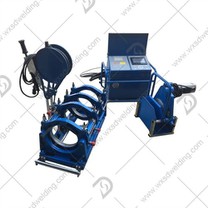
Before operation
1. Check the equipment: ensure that all parts of the welding machine are intact, the heating system, pressurization system, control system, etc. are operating normally, the wires are firmly connected, and there are no safety hazards such as leakage. Check whether the surface of the heating plate is flat and clean. If there are impurities or damage, it should be cleaned or replaced in time.
2. Prepare materials: According to the material and specifications of the plastic to be connected, select appropriate welding parameters and prepare the corresponding plastic pipes or plates. Ensure that the ends of the material are flat and clean, without impurities such as oil, dust, etc., so as not to affect the welding effect.
3. Adjust parameters: According to the characteristics of the plastic material and the docking requirements, the control system of the welding machine accurately adjusts the parameters such as heating temperature, heating time, pressurization pressure and holding time. Different plastic materials require different parameter settings. For example, for polyethylene (PE) plastics, the heating temperature is generally between 200-230℃, while the heating temperature of polyvinyl chloride (PVC) plastics is lower, usually around 180-210℃.
During operation
1. Correct clamping: Place the plastic parts to be welded steadily in the fixture device to ensure that they are in the correct position and will not move during the welding process. For pipes, ensure that their axes are in the same straight line; for plates, make the butt joints fit the fixture tightly to avoid gaps or tilts.
2. Avoid interference: During the heating and pressurization process, try to avoid interference from external factors such as vibration, airflow, etc. Keep the working environment stable to prevent the quality of welding from being reduced due to accidental collisions or wind.
3. Observation status: Pay close attention to various states during the welding process, including the temperature display of the heating plate, the pressure changes of the pressurization system, and the melting and deformation of the plastic parts. If there are any abnormalities, such as too high or too low temperature, unstable pressure, etc., stop the operation in time, find out the cause and make adjustments.
After operation
1. Cooling treatment: After the welding is completed, do not move or disassemble the connected plastic parts immediately. Let them cool naturally in the fixture for a period of time to ensure that the welded parts are fully solidified and stable. The cooling time depends on the type of plastic and the size of the component, and generally takes a few minutes to dozens of minutes.
2. Clean the equipment: Clean the plastic chips and impurities left on the heating plate, clamps and other parts of the welding machine in time to keep the equipment clean. You can use a clean cloth or a special cleaning agent to wipe it, but be careful to avoid damaging the surface and parts of the equipment.
3. Turn off the power: After cleaning, turn off the power of the welding machine and unplug it to prevent accidental electric shock or damage caused by long-term power supply of the equipment. At the same time, store the equipment properly to avoid moisture, corrosion, etc.