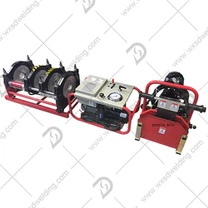
1. Check the cooling system:
Clean the dust and debris on the cooling fan to ensure the normal operation of the fan.
Check whether the cooling channel is blocked. If there is any blockage, it should be cleaned in time.
2. Check the temperature sensor:
Confirm whether the temperature sensor connection is loose. If it is loose, reconnect it firmly.
If the temperature sensor is damaged, replace it with a new sensor.
3. Check the power component:
Check whether the power tube, transformer and other components are aging or damaged. If there is any problem, replace them.
4. Reduce the workload:
Avoid continuous high-load work for a long time, arrange work breaks appropriately, and give the equipment rest time.
5. Check the cooling system:
Ensure that the coolant is sufficient. If it is insufficient, add it.
Check whether the coolant circulation is normal. If there is any blockage, clean it.
6. Check the circuit connection:
Check whether the connection of the relevant circuit is good, whether there is cold soldering, short circuit, etc.
7. Software calibration:
Calibrate the setting value of the overheat protection to ensure that it is within a reasonable range.
Wuxi Shunda Plastic Pipes Welding Machine Co., Ltd
+86-510-83292458
 Language
- English
- O'zbek
- Čeština
- Srbija jezik (latinica)
- slovenščina
- عربي
- Malti
- Français
- dansk
- українська
- Bai Miaowen
- suomi
- Việt Nam
- Svenska
- Türkçe
- Gaeilgenah Éireann
- 日本語
- Ελληνικά
- slovenčina
- ไทย
- Cymraeg
- Català
- русский
- magyar
- hrvatski
- România limbi
- Italiano
- বাংলা
- עברית
- فارسی
- Deutsch
- 한국어
- íslenska
- اردو
- Kreyòl Ayisyen
- Indonesia
- Português
- bosanski
- Melayu
- Nederlands
- Norsk
- हिंदी
- Eesti
- Lietuvių
- Latviešu
- Español
- Български
- Polski