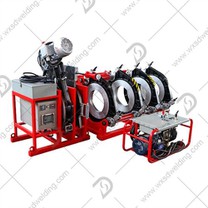
1. Select high-quality pipe original parts
Select pipe original parts manufacturers with reliable product quality control systems to ensure that the quality of pipes and fittings meets the standard requirements. This includes checking the raw material properties, production equipment and manufacturing processes of pipes and fittings, and avoiding manufacturers that use non-special materials or have incomplete testing equipment.
2. Preparation before welding
Cleaning: Before welding, the connection area of the pipes and fittings must be cleaned to remove the oxide layer, oil stains and impurities on the surface.
Marking the insertion depth: Mark the insertion depth on the pipe to ensure that the pipe reaches the specified depth when inserted into the fitting.
Check the quality of the pipe: Check whether there are scratches, cracks and other defects on the surface of the pipe to ensure that the pipe is within its service life.
3. Welding process control
Welding parameter setting: Strictly follow the welding parameters of the electric fusion fittings, including welding time, voltage and current. Ensure that the welding parameters meet the manufacturer's requirements to avoid over-melting or loose welding.
Welding process monitoring: During the welding process, monitor whether there are any abnormal phenomena at the welding site, such as smoking, over-melting, etc. After welding is completed, check whether there is any material lifting or extrusion problem at the connection site.
4. Inspection after welding
Appearance inspection: Check whether there are any cracks, deformation or scorching at the welding site.
Pressure test: Perform pressure test to ensure that there is no leakage at the connection.
Non-destructive testing: Use visual, non-destructive testing, peel test and crushing test methods to control the quality of electric fusion welding.
5. Environmental condition control
Temperature control: The welding environment temperature should be between -5℃ and 40℃, and construction should be avoided under extreme temperatures.
Avoid bad weather: Avoid welding under bad weather conditions such as strong wind, heavy rain or direct sunlight.
6. Equipment maintenance
Regular calibration and verification: Ensure that the electric fusion welding machine is calibrated and verified regularly to ensure the accuracy and reliability of the equipment.
Check the power supply voltage: Ensure that the power supply voltage meets the requirements of the welding machine to avoid voltage fluctuations affecting the welding quality.
7. Construction process management
Make a construction plan: For the case where there are a large number of fusion flanges to be installed, a detailed construction plan should be made before installation and the operation should be carried out according to the plan.
Avoid external force interference: During the welding and cooling process, avoid applying external force to the welding part to ensure the welding quality.