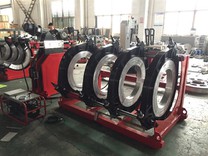
Personal safety
1. Prevent burns: The heating plate of the welding machine is very hot during operation, reaching 210-230℃. It is strictly forbidden to touch the heating plate with your hands during operation to avoid burns. When taking the heating plate or performing related operations, be sure to use special heat-insulating gloves or tools.
2. Pay attention to electrical safety: Make sure that the power cord of the welding machine is intact, without damage, leakage, etc. Use a power socket that meets safety standards and ensure that the socket is well grounded. Before turning on the power, check whether the electrical system of the welding machine is normal. If leakage, short circuit, etc. are found, stop using it immediately and have it repaired by a professional.
3. Avoid pinching: When clamping and disassembling pipes, be careful to prevent your fingers from being pinched by the clamp. When operating the clamp, follow the operating procedures to avoid sudden clamping of the clamp due to misoperation.
4. Keep the work area clean: The work area should be kept clean and tidy, without accumulation of debris, to prevent accidents due to tripping or slipping. At the same time, ensure that the work area is well ventilated to avoid harm to the human body caused by odor and harmful gases generated during the welding process.
Equipment operation
1. Follow the operating procedures: Before operating the welding machine, you must read the instruction manual of the equipment in detail and be familiar with the operating methods and procedures of the welding machine. Strictly follow the operating procedures to clamp pipes, set welding parameters, heat pipes, butt welding and cool and finalize. Parameters must not be changed or operating steps simplified at will.
2. Prevent overload: According to the rated power and pipe specifications of the welding machine, reasonably select welding parameters to avoid equipment overload due to excessive welding current, excessive pressure or long heating time. Long-term overload operation will shorten the service life of the equipment and may even cause equipment failure and safety accidents.
3. Observe the operating status of the equipment: During the welding process, closely observe the operating status of the welding machine, such as the temperature display of the heating plate, the clamping force of the clamp, and the working instructions of the electrical control system. If the equipment is found to be operating abnormally, such as temperature out of control, loose fixtures, abnormal noise or odor, etc., the operation should be stopped immediately, the power supply should be cut off, the cause should be found and the fault should be eliminated.
Equipment maintenance
1. Regular inspection: Regularly conduct a comprehensive inspection of the welding machine, including the surface flatness of the heating plate, the aging of the heating wire, the degree of wear of the fixture, whether the connection of the electrical components is loose, etc. If problems are found, the relevant parts should be replaced or repaired in time to ensure the normal operation of the equipment and the quality of welding.
2. Professional maintenance: For failures of the welding machine, non-professionals are strictly prohibited from disassembling and repairing it privately. The equipment supplier or professional maintenance personnel should be contacted in time for inspection and maintenance to ensure that the repaired equipment meets the safety and performance requirements.
3. Proper storage: When not in use, the welding machine should be stored in a dry, ventilated, cool place to avoid direct sunlight and humid environment. At the same time, the equipment should be properly placed to prevent collision or extrusion, which may cause equipment damage.