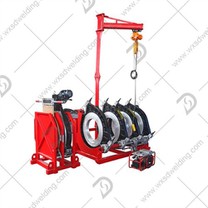
A fusion splicer is a piece of equipment used to join two or more metal workpieces together. It works by heating metal workpieces to their melting point and applying pressure to fuse them together, forming a strong connection.
The working principle of the welding machine is based on the interaction of thermal energy and mechanics. Typically, fusion splicers use arc, laser, friction or resistance methods to heat metal workpieces. After heating, the surfaces of the workpieces begin to melt and pressure is applied to bring them into contact and form a connection. Once cooled, the joint becomes strong and able to withstand certain forces and stresses.
There are many types of fusion splicers, each suitable for different applications and materials. Common fusion welding machines include arc welding machines, laser welding machines, friction welding machines and resistance welding machines. These machines use different energy sources and technologies in different scenarios to meet different needs.
Welding machines are widely used in a variety of industries, including manufacturing, construction, automotive, aerospace, and more. They can be used to connect metal pipes, members, structural parts, electronic components, etc. The use of fusion splicers can provide high-strength and reliable connections, thereby ensuring product quality and performance.
A fusion splicer is an important tool used to join metal workpieces together. They play a key role in a variety of industries, and as technology develops, the performance and efficiency of fusion splicers continue to improve.
Wuxi Shunda Plastic Pipes Welding Machine Co., Ltd
+86-510-83292458
 Language
- English
- O'zbek
- Čeština
- Srbija jezik (latinica)
- slovenščina
- عربي
- Malti
- Français
- dansk
- українська
- Bai Miaowen
- suomi
- Việt Nam
- Svenska
- Türkçe
- Gaeilgenah Éireann
- 日本語
- Ελληνικά
- slovenčina
- ไทย
- Cymraeg
- Català
- русский
- magyar
- hrvatski
- România limbi
- Italiano
- বাংলা
- עברית
- فارسی
- Deutsch
- 한국어
- íslenska
- اردو
- Kreyòl Ayisyen
- Indonesia
- Português
- bosanski
- Melayu
- Nederlands
- Norsk
- हिंदी
- Eesti
- Lietuvių
- Latviešu
- Español
- Български
- Polski