1. Welding preparation
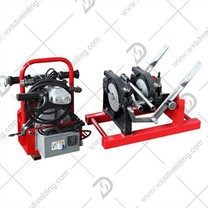
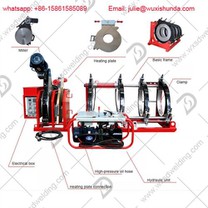
Welding preparation is mainly to check whether the condition of the hot melt welding machine meets the operating requirements. For example, check whether the fasteners in various parts of the machine are dropped or loose; check whether the electrical circuit connection of the whole machine is correct and reliable; check whether the hydraulic oil in the hydraulic tank is sufficient; confirm that the power supply matches the input requirements of the machine; whether the heating plate meets Requirements (whether the coating is damaged); trial operation of milling cutters and oil pump switches, etc.
Then install slips with the same pipe specifications into the frame; set the heating plate temperature to the welding temperature (the welding temperature of the polyethylene pipe machine channel is 200~230℃). Before heating, use soft paper or cloth dipped in alcohol to wipe the heating plate surface, but be careful not to scratch the PTFE anti-stick layer.
2. Welding
Welding should be performed according to the parameters of the welding process card. If necessary, appropriate adjustments should be made according to changes in weather, ambient temperature, etc. The main steps are as follows.
(1) Use a clean cloth to remove dirt from both pipe ends. Place the pipe in the frame slip so that the lengths protruding from both ends are equal (it should be as short as possible to meet the requirements of milling and heating, usually 25~30mm). If necessary, use supports to hold up parts other than the pipe frame so that the axis of the pipe and the center line of the frame are at the same height, and then tighten them with slips.
(2) Insert the milling cutter, first turn on the power switch of the milling cutter, then slowly close the welding ends of the two pipes, and apply appropriate pressure until continuous chips appear at both ends, remove the pressure, wait for a moment, and then exit the movable frame. , turn off the power of the milling cutter. The chip thickness should be 0.5~1.0mm. The chip thickness can be adjusted by adjusting the height of the milling blade.
(3) Take out the milling cutter, close the two pipe ends, and check the alignment of both ends. The amount of misalignment at both ends of the pipe should not exceed 10% of the pipe wall thickness or 1mm, whichever is greater. It can be corrected to a certain extent by adjusting the straightness of the pipe and elastic slips; there is no obvious gap between the two ends of the pipe when closing, and the gap The maximum width cannot exceed: 0.3mm (DN<225mm), 0.5mm (225mm400mm). If you are not satisfied with the above requirements, you should mill again until you meet the above requirements.
(4) Measure the drag force (friction resistance of the moving fixture). This pressure should be superimposed on the process parameter pressure to obtain the actual operating pressure. And check whether the heating plate temperature reaches the set value.
(5) After the temperature of the heating plate reaches the set value, place it in the rack and apply regular pressure until the minimum curling edge on both sides reaches the specified width and the pressure is reduced to the specified value (to maintain just contact between the pipe end surface and the heating plate) , to absorb heat.
(6) After the time is up, withdraw the movable frame, quickly take out the heating plate, and then close the two pipe ends. The switching time should be as short as possible and cannot exceed the specified value. After cooling to the specified time, release the pressure, loosen the slips, and take out the connected pipes.
The features of this welding machine are:
①The optimal welding parameters for pipes of different materials, diameters, and SDR have been set in advance;
② Fully automatic control of welding time, temperature and pressure;
③ Active detection and compensation of drag pressure;
④The heating plate pops up automatically to minimize temperature loss;
⑤ Full-process active monitoring and prompts for each operation step during the welding process;
⑥The rapid clamping system improves operating efficiency by 30%;
⑦ The dynamic data of the welding process can be printed out or downloaded to the PC of the quality inspector through the data transmission system to review the on-site performance of the welding machine and operator;
⑧The database can store relevant welding parameters of up to 600 interfaces.