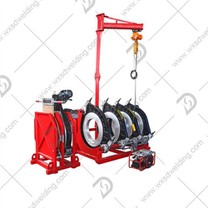
I. Pressure Adjustment Steps
1. Preparation
Ensure the equipment is stopped, check the hydraulic oil level is normal, and ensure there are no leaks in the pipeline.
Turn on the power and start the pump motor to put the system into standby mode.
2. Release Initial Pressure
Loosen the pressure regulating nut on the relief valve and rotate the adjusting screw counterclockwise to the fully relaxed position, bringing the initial system pressure to zero.
3. Set the Target Pressure
Slowly rotate the relief valve adjusting screw clockwise while observing the reading on the hydraulic pressure gauge.
Set the pressure value according to the welding material and pipe diameter. For example, PE pipe welding typically requires a pressure of around 6 MPa; refer to the manufacturer's specifications for specific values.
4. Fine-tuning and Locking
If using a constant pressure variable pump, further adjust the pressure compensation device screw to fine-tune the working pressure to the range of 5–5.8 MPa to ensure stable operation. After reaching the set pressure, tighten the lock nut of the overflow valve to prevent loosening during operation.
5. Testing and Verification
Perform a no-load test by pushing the hydraulic lever to observe whether the fixture movement is smooth.
Record the "dragging pressure" (i.e., the minimum pressure required to overcome friction). The process pressure will be added to this value during subsequent welding.
II. Pressure Adjustment Points for Different Machine Models
1. PE Hydraulic Hot Melt Welding Machine: Control the pressure by rotating the pressure regulating valve. During operation, first reduce the pressure to zero, then gradually increase it to the calculated value (e.g., wall thickness × coefficient).
2. Flash Butt Welding Machine: Adjustment is required according to the upsetting force requirements. The system should be able to respond quickly and maintain stable pressure to avoid affecting welding quality due to frame deformation.
III. Precautions
1. The pressure adjustment process must be carried out slowly to avoid sudden pressure increases that could damage components.
2. The pressure setting must not exceed the maximum working pressure indicated on the equipment nameplate.
3. Regularly calibrate the pressure gauge to ensure accurate readings.