


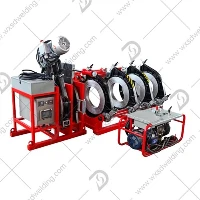
If you work in industries like water distribution, gas supply, or agricultural irrigation, you probably already know how reliable polyethylene (PE) pipe systems are. But their longevity? That's all tied to proper welding-and if you're the one responsible for maintaining or buying PE pipe welding gear, you've definitely wondered: what are the key spare parts that keep these machines running smoothly? As a supplier who's been in this space for years, I've seen firsthand how skipping routine part checks or ignoring small replacements can derail a whole project. Let's break down the essential spare parts for PE pipe welding machines, plus where to find the right replacements when you need them.
First off, let's ground this: PE pipe welding machines aren't one-size-fits-all, and neither are their spare parts. Whether you're using a Plastic Pipes Manual Hydraulic Butt Welding unit for small irrigation jobs or a heavy-duty setup for city water mains, the core spare parts stay consistent-they're just sized to match your machine's capacity. I've had contractors come to me panicking because their heating plate stopped working mid-job, only to find out it was a burnt heating element, not a whole machine replacement. That's the kind of small spare part that saves you time and cash.
Let's start with the most frequently worn parts, because those are the ones you'll go through the fastest. The first one? Heating elements (or heating plates, as some call them). PE pipe welding works by melting the ends of two pipe sections, pressing them together, and letting the joint cool. The heating plate is the part that does the melting, so it's constantly exposed to high temperatures, resin buildup, and occasional scratches from misaligned pipes. I always tell customers to keep a spare heating element on hand, especially if they're working on tight deadlines. A common mistake people make is using a generic heating plate from a hardware store-these rarely have the right temperature calibration for PE, which leads to weak joints. Stick to parts designed specifically for your machine model, whether it's a Pe Pipe Welding Machine for Poly Pipe Welder or a manual HDPE setup.
Next up, facing tools-another wear-and-tear must-have. Before you weld two PE pipes, you have to cut and face their ends to create a perfectly flat, smooth surface; if there's a bump or gap, the joint will leak. The facing tool (usually a type of rotary cutter or blade assembly) takes care of this. But over time, its blades dull, and the mounting screws get loose from repeated use. Spare blades are easy to replace, but I always recommend keeping a whole facing tool set if you're working on large-diameter pipes (12 inches or more) because even a small dull spot on the blade can ruin a 2-foot-long pipe section. I once had a contractor lose a full day's work because their facing tool blade broke, and they didn't have a spare-don't make that mistake.
Then there's the clamping system, which is the backbone of any PE welding machine. Clamps hold the two pipe sections tight while they're being heated and fused, so if a clamp slips or loosens mid-process, you end up with a misaligned joint that needs to be redone. The most common spare parts for clamps are jaw inserts, hydraulic hoses, and pressure gauges. Jaw inserts are the rubber or plastic pads that grip the pipe to prevent it from slipping; over time, they wear down, get damaged, or collect dirt, which makes them less effective. I've had customers ask me to just replace the metal jaws, but no-those soft inserts are the real workhorses here. If they're worn out, even a brand-new clamp won't hold a pipe steady. For hydraulic setups, like the Manual HDPE Welding Machine many small teams use, hydraulic hoses are another top spare. Hoses get kinked, develop small leaks, or lose pressure over time-keeping a spare hose that's matched to your machine's PSI rating is non-negotiable. And let's not forget pressure gauges: a faulty gauge can lead to too much or too little pressure during fusion, which causes weak joints. A quick calibration check every few jobs can catch this, but a spare gauge will keep you from being stuck.
Moving on to smaller, but equally critical, electrical parts-these are the ones that people often overlook until their machine won't turn on. The main culprits here are power cords, thermocouples, and control switches. Power cords fray easily if they're being dragged across job sites, stepped on, or chewed by rodents (I see that a lot in agricultural areas!). A spare power cord is cheap insurance. Thermocouples are the sensors that tell the heating plate what temperature it's at; if a thermocouple breaks, the heating plate either won't heat up or will overheat, which ruins the PE material. I've seen contractors try to use a cheap thermocouple from a general electronics store, but they're not calibrated for the high, specific temperatures needed for PE welding-always go for OEM (original equipment manufacturer) parts here. Control switches, like the ones that toggle between heat and pressure, also wear out from repeated flipping, so a spare switch or two will save you from a dead machine mid-job.
Wait, what about fusion accessories? I'm talking about items like fusion mirrors (yes, that's another name for the heating plate), alignment pins, and cooling time timers. Alignment pins are small metal pins that line up the two pipe sections before clamping-if one bends or breaks, your pipes won't align correctly, leading to lopsided joints. Cooling time timers are super important because PE needs a specific amount of time to cool under pressure before you can release the clamps; a broken timer can make you release too soon, causing the joint to separate. For manual machines like the Manual Butt Fusion Pipe Welding Machine often used for smaller projects, these timers are usually mechanical, so they're pretty simple, but still easy to wear out.
Now, let's talk about when to replace these parts, not just keep spares. A heating plate that has resin buildup (called "char") from repeated welding? You can clean it with a plastic scraper, but if the scratches are deeper than a credit card, it's time to replace it-scratches create weak spots in the weld. Facing blades that can't cut a clean edge (you'll see small burrs on the pipe ends)? Replace them. Clamp jaw inserts that have more than 1/8 inch of wear? They won't grip pipes tightly, so you'll get misalignment. It's way cheaper to replace a $20 blade than to redo a $500 pipe section.
As a supplier, I get asked all the time: "Do I really need all these spares?" My answer is almost always yes-especially if you're working on regular jobs or in remote areas where parts take days to ship. I've had a customer out in a rural farming area who's well over an hour from the nearest hardware store, and his heating element died on a Friday afternoon. He had to wait until Monday to get a replacement, which set his irrigation project back a whole week and cost him in lost crop time. That's the kind of avoidable headache that a $50 spare part could've prevented.
If you're not sure which parts fit your specific machine, don't guess. Whether you have a manual, hydraulic, or semi-automatic PE pipe welding setup, the right spare parts are critical for consistent, leak-free joints. I've seen too many bad welds because someone used a generic part that didn't fit or work properly-those bad joints lead to pipe bursts, which are way more expensive to fix than a few spare parts.


So, to wrap this up, the must-have spare parts for any PE pipe welding machine are: heating plates/elements, facing tool blades, clamp jaw inserts, hydraulic hoses, pressure gauges, thermocouples, power cords, and small alignment pins. Keep these on hand, check them regularly, and replace them when they show wear-and you'll avoid almost all the common machine breakdowns on job sites.
If you're in the market for genuine PE pipe welding machines or need to source the right OEM spare parts for your current setup, don't hesitate to reach out. We've got a full catalog of machines and parts tailored to different project sizes, from small manual units for residential irrigation to heavy-duty hydraulic setups for municipal water systems. Let's make sure your welding gear is ready to go when you are-no more mid-job surprises.