


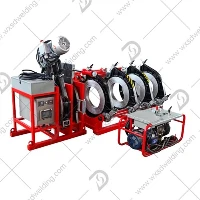
As a seasoned supplier of workshop welding machines, I've encountered numerous inquiries from clients about the compatibility of our equipment with high - strength steel welding. High - strength steel has become increasingly popular in various industries due to its excellent mechanical properties, such as high yield strength, good toughness, and enhanced corrosion resistance. However, welding high - strength steel presents unique challenges that require careful consideration of the welding process and equipment. In this blog post, I'll delve into the question of whether a workshop welding machine can be used for high - strength steel welding, exploring the factors involved and providing practical insights for welders and manufacturers.
Understanding High - Strength Steel
High - strength steel is a type of steel that has been specifically engineered to have higher strength properties compared to conventional steels. These steels are often used in applications where weight reduction, increased durability, and improved performance are critical, such as in the automotive, aerospace, construction, and heavy machinery industries. High - strength steels can be classified into different categories based on their chemical composition, manufacturing process, and mechanical properties. Some common types of high - strength steel include high - strength low - alloy (HSLA) steel, advanced high - strength steel (AHSS), and ultra - high - strength steel (UHSS).
The unique properties of high - strength steel, such as its high carbon equivalent and rapid cooling rate during welding, make it more susceptible to cracking and other welding defects. Therefore, welding high - strength steel requires a thorough understanding of its characteristics and the appropriate welding techniques to ensure a high - quality weld.
Factors Affecting Welding High - Strength Steel with Workshop Welding Machines
1. Welding Process
The choice of welding process is crucial when welding high - strength steel. Different welding processes have different heat input characteristics, which can significantly affect the quality of the weld. Some common welding processes used for high - strength steel include shielded metal arc welding (SMAW), gas metal arc welding (GMAW), flux - cored arc welding (FCAW), and gas tungsten arc welding (GTAW).
- SMAW: This is a versatile welding process that is commonly used in workshops. It uses a consumable electrode coated with flux to create the arc and deposit the filler metal. SMAW can be used for welding high - strength steel, but it requires careful control of the welding parameters to prevent cracking and other defects.
- GMAW: Also known as MIG welding, GMAW is a popular welding process for high - strength steel due to its high deposition rate and good weld quality. It uses a continuous solid wire electrode and a shielding gas to protect the weld pool from atmospheric contamination. GMAW can be used with different types of shielding gases, such as argon, carbon dioxide, or a mixture of both, depending on the specific requirements of the welding application.
- FCAW: Flux - cored arc welding is similar to GMAW, but it uses a tubular electrode filled with flux instead of a solid wire electrode. FCAW is a high - productivity welding process that can be used for welding high - strength steel in various positions. It offers good penetration and weld quality, but it may produce more fumes and spatter compared to GMAW.
- GTAW: Also known as TIG welding, GTAW is a precise welding process that is often used for welding thin - walled high - strength steel components. It uses a non - consumable tungsten electrode and a shielding gas to create the arc and melt the base metal. GTAW provides excellent control over the welding process and produces high - quality welds, but it has a relatively low deposition rate and requires skilled operators.
2. Welding Machine Capabilities
The capabilities of the workshop welding machine also play a crucial role in determining its suitability for high - strength steel welding. When selecting a welding machine for high - strength steel, it's important to consider the following factors:
- Power Output: High - strength steel often requires higher welding currents and voltages to achieve proper fusion and penetration. Therefore, the welding machine should have sufficient power output to meet the requirements of the welding application.
- Welding Current Range: The welding machine should be able to provide a wide range of welding currents to accommodate different thicknesses and types of high - strength steel. This allows for greater flexibility in the welding process and ensures that the welds are of high quality.
- Welding Voltage Control: Precise control of the welding voltage is essential for maintaining a stable arc and producing consistent welds. The welding machine should have a reliable voltage control system to ensure that the welding parameters are accurately maintained throughout the welding process.
- Pulse Welding Capability: Pulse welding is a technique that can be used to reduce the heat input and minimize the risk of cracking when welding high - strength steel. Some workshop welding machines are equipped with pulse welding capabilities, which allow for better control of the welding process and improved weld quality.
3. Filler Metal Selection
The selection of the appropriate filler metal is critical for achieving a high - quality weld when welding high - strength steel. The filler metal should have similar chemical composition and mechanical properties to the base metal to ensure good compatibility and joint strength. Some common types of filler metals used for high - strength steel welding include low - hydrogen electrodes, solid wires, and flux - cored wires.
- Low - Hydrogen Electrodes: These electrodes are designed to minimize the hydrogen content in the weld metal, which helps to reduce the risk of cracking. Low - hydrogen electrodes are commonly used for SMAW and are available in different sizes and compositions to suit various high - strength steel applications.
- Solid Wires: Solid wires are used in GMAW and GTAW processes. They are available in a wide range of compositions and diameters to meet the specific requirements of high - strength steel welding. The choice of solid wire depends on the type of high - strength steel, the welding process, and the desired weld properties.
- Flux - Cored Wires: Flux - cored wires are used in FCAW processes. They offer good weldability and high deposition rates, making them suitable for welding high - strength steel in various positions. Flux - cored wires are available in different types, such as self - shielding and gas - shielded, depending on the welding application.
Can a Workshop Welding Machine Be Used for High - Strength Steel Welding?
The answer to this question is yes, a workshop welding machine can be used for high - strength steel welding, but it depends on several factors. If the workshop welding machine has the appropriate capabilities, such as sufficient power output, a wide welding current range, and precise voltage control, and if the correct welding process and filler metal are selected, it can produce high - quality welds on high - strength steel.
However, it's important to note that welding high - strength steel requires more skill and expertise compared to welding conventional steels. Welders need to be trained in the proper welding techniques and procedures for high - strength steel to ensure that the welds meet the required quality standards. Additionally, proper pre - welding and post - welding treatments, such as preheating, post - weld heat treatment, and stress relieving, may be necessary to minimize the risk of cracking and other welding defects.
Our Workshop Welding Machines for High - Strength Steel Welding
As a supplier of workshop welding machines, we offer a wide range of products that are suitable for high - strength steel welding. Our HDPE Pipe Workshop Welding Machine is designed to provide high - quality welds on HDPE pipes, which are often used in high - strength applications. With its advanced features and reliable performance, it can meet the demanding requirements of high - strength steel welding.


Our Workshop Pipe Fitting Fabrication Machine is another excellent option for welding high - strength steel pipes and fittings. It offers precise control over the welding process and can produce consistent, high - quality welds.
In addition, our Ppr Pipe Fitting Machine is suitable for welding PPR pipes, which are commonly used in high - strength plumbing systems. It provides efficient and reliable welding performance, ensuring the integrity of the high - strength pipe joints.
Conclusion
In conclusion, a workshop welding machine can be used for high - strength steel welding, but it requires careful consideration of the welding process, machine capabilities, and filler metal selection. By choosing the right equipment and following the proper welding techniques and procedures, welders can achieve high - quality welds on high - strength steel.
If you're interested in purchasing a workshop welding machine for high - strength steel welding or have any questions about our products, please feel free to contact us for more information and to discuss your specific requirements. We're committed to providing our customers with the best welding solutions and technical support to help them succeed in their welding applications.
References
- "Welding of High - Strength Steels" by American Welding Society
- "High - Strength Steel Welding Handbook" by The Welding Institute
- "Modern Welding Technology" by John R. Walker