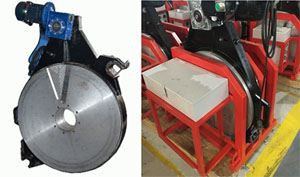
I. Scientific Usage Specifications
1. Environmental Control
Maintain a dry working environment (humidity ≤ 60%) with good ventilation to avoid dust accumulation. The recommended ambient temperature is between 5-40°C. A heat sink should be installed in high-temperature environments.
2. Operating Specifications
Avoid overloading (current should not exceed 90% of the rated value). Preheat the machine for 5-10 minutes before welding, and run it at no load for 2 minutes before shutting down to allow for cooling.
2. Core Component Maintenance
1. Electrode System
Inspect the contact tip for wear every 50 hours (a hole diameter deviation of 0.2mm requires replacement).
Regularly clean the oxide layer on the electrode contact surface (contact resistance > 0.5Ω requires polishing).
2. Wire Feed Mechanism
Inspect the wire feed roll groove for wear weekly (a depth > 0.3mm requires replacement). Clean dust from the wire feed hose monthly (using compressed air).
3. Cooling System Check the coolant level quarterly (must reach 2/3 of the sight glass).
Use the manufacturer's specified coolant (hard water is prohibited).
III. Regular Inspection Plan
1. Basic Inspection
Check insulation resistance every 6 months (≥1MΩ).
Calibrate welding parameters annually (current/voltage accuracy error ≤±3%)
2. Deep Maintenance
Full inspection every 2000 hours (replace worn bearings/seals).
Return to the factory for circuit board inspection and system upgrade every 3 years.
IV. Storage and Emergency Procedures
1. Long-term Storage
Disconnect the power supply and clean the equipment. Store in a moisture-proof cabinet (humidity ≤30%). Power on and operate for 30 minutes each month to prevent components from getting wet.
2. Troubleshooting
Immediately shut down and inspect if abnormal heating occurs (temperature rise exceeding 40°C requires repair).
If welding quality deteriorates, prioritize checking the gas flow rate and electrode condition.