


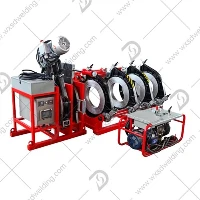
Hey there! As a supplier of Manual PE Pipe Welding Machines, I often get asked about the cooling time after welding with these machines. It's a crucial factor that can significantly impact the quality and durability of the welded joints. So, let's dive right in and explore what this cooling time is all about.

First off, what is a Manual PE Pipe Welding Machine? Well, it's a handy tool used to join polyethylene (PE) pipes together. These machines come in different types, like the Pe Pipe Electric Welding Machine, Pe Butt Welding Machine, and Welding Machine for PE Pipe. Each type has its own unique features and applications, but they all share the common goal of creating strong and reliable welds.

Now, let's talk about cooling time. After you've used a manual PE pipe welding machine to join two pipes, the welded area needs time to cool down and solidify. This cooling process is essential because it allows the polyethylene material to regain its strength and integrity. If you don't give the weld enough time to cool, it can lead to a weak joint that may fail under pressure or over time.
So, how long does the cooling time typically take? Well, it depends on several factors. One of the most important factors is the thickness of the pipes. Thicker pipes generally require more time to cool because there's more material to solidify. For example, if you're welding thin-walled PE pipes, the cooling time might be as short as a few minutes. But if you're working with thick-walled pipes, it could take 10 minutes or more.
Another factor that affects cooling time is the ambient temperature. In colder environments, the weld will cool faster because the surrounding air is removing heat from the welded area more quickly. On the other hand, in hot environments, the cooling process will be slower. So, if you're working in a hot climate, you may need to be more patient and give the weld extra time to cool.
The type of welding process you're using can also play a role in the cooling time. Some welding methods, like butt welding, may require a longer cooling time compared to other methods. This is because butt welding involves melting the ends of the pipes and then pressing them together to form a joint. The larger surface area of the weld means there's more material that needs to cool and solidify.
It's also important to note that the cooling time isn't just about waiting for the weld to stop being hot to the touch. The polyethylene material needs to reach a certain temperature and state of solidification to ensure a strong joint. That's why it's a good idea to follow the manufacturer's recommendations for cooling time. These recommendations are based on extensive testing and research, so they can give you a good starting point for your welding projects.
During the cooling process, it's crucial to avoid disturbing the welded joint. This means not moving or putting any stress on the pipes until the weld has fully cooled. If you try to move the pipes too soon, you can cause the weld to crack or separate, which will compromise the integrity of the joint.
To help speed up the cooling process, you can use some simple techniques. For example, you can use a fan to blow air over the welded area. This will increase the rate of heat transfer and help the weld cool faster. Just make sure the fan isn't blowing too hard, as this could cause the weld to cool unevenly and lead to problems.
Another thing to keep in mind is that the cooling time can affect the overall productivity of your welding projects. If you're on a tight schedule, you may be tempted to rush the cooling process. But remember, taking the time to let the weld cool properly will save you time and money in the long run by preventing costly repairs and replacements.

In addition to following the recommended cooling time, it's also important to inspect the welded joint after it has cooled. Look for any signs of cracks, gaps, or other defects. If you notice any problems, it's best to re-weld the joint to ensure a strong and reliable connection.
So, to sum it up, the cooling time after welding with a manual PE pipe welding machine is a critical step in the welding process. It depends on factors like pipe thickness, ambient temperature, and the type of welding process. By following the manufacturer's recommendations and taking the time to let the weld cool properly, you can ensure that your welded joints are strong, durable, and reliable.
If you're in the market for a Manual PE Pipe Welding Machine or have any questions about welding or cooling times, don't hesitate to get in touch. We're here to help you find the right machine for your needs and provide you with all the support and advice you need to get the best results from your welding projects.
References
- Polyethylene Pipe Handbook, various editions
- Manufacturer's manuals for Manual PE Pipe Welding Machines