


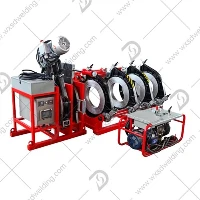
If you've ever worked in pipeline construction or heavy-duty piping projects, you know that one size rarely fits all. A lot of guys come to me asking straight up: "Can a Pipe Butt Welding Machine be customized?" As a supplier who's been in this game for over a decade, my answer is always an emphatic yes-but there's a lot more to it than just slapping a custom label on a machine. Let me break this down like I would to a teammate who's never dealt with custom builds before.
First off, let's get on the same page about what a pipe butt welding machine actually does. These tools are the backbone of joining pipes end-to-end, whether you're working with HDPE, PP, or other thermoplastics. Standard models get the job done for most job sites-your run-of-the-mill Straight Tube Butt Fusion Machine, the semi-automatic hydraulic ones that handle 63mm to 450mm pipes, the whole lineup. But when a job has weird specs? That's where customization shines, and that's where a lot of suppliers either drop the ball or overcomplicate it.
I've seen too many contractors try to force a standard machine into a custom scenario, and it always ends up costing them time and cash. Last year, a small utility company came to me because they needed to weld extra-large gas pipelines that were 600mm-our standard semi-automatic models only go up to 450mm, and the off-the-shelf large ones were too bulky to fit in their tight trench work. That's the kind of problem that makes you realize customization isn't a "nice-to-have"-it's a necessity for a lot of real-world jobs.
So what does customizing a pipe butt welding machine actually entail? It's not just "make it bigger" or "add a button." It's tailoring every part to match your pipe specs, job site constraints, and even workflow preferences. Let's walk through the common types of custom requests I get, and how we pull them off at our shop.
First, size adjustments are the most frequent. Pipes come in all shapes and diameters, and sometimes a standard machine doesn't cover the exact range you need. If you're working with HDPE pipes that are 315mm but your project only needs to weld that specific size (not a range from 250mm to 400mm), we can scale the clamps and heating plate down to optimize for that exact size. No wasted material, no extra weight hauling around a machine that's overkill. I've also done custom builds for small-diameter pipes used in irrigation-ones that can fit through narrow openings, instead of the 160mm minimum most standard machines have. That's a game-changer for jobs like underground drip lines where space is at a premium.
Then there's the pipe type customization. Not all thermoplastics weld the same. HDPE is the most common, but PP pipes have different melting points and require different pressure settings. A lot of contractors use a standard Butt Fusion Welding Machine For HDPE PP, but if you're working with a rare blend of plastic-like a modified polyethylene for offshore pipelines-we can tweak the heating plate temperature controls and pressure regulators to match exactly what that material needs. I had a offshore construction team come in a while back, they were working with a custom marine-grade plastic that didn't play nice with standard settings. We adjusted the machine's hydraulic pressure accuracy (down to a 0.5 bar margin, instead of the standard 1 bar) and swapped the heating plate's material to one that doesn't react with the plastic. That's the kind of detail you can't get off a shelf.
Job site constraints are another big one. Not every job is in a open field. I've had requests for machines that are lighter for rooftop work, where every pound counts. Or machines that have foldable frames so they can be loaded into a compact van instead of a flatbed truck. Once, a contractor working in residential neighborhoods needed a machine that was quiet enough not to disturb homeowners during welds-we swapped the hydraulic pump for a quieter model and added sound-dampening panels. Those custom tweaks don't affect the machine's performance, but they make or break a job on a day-to-day basis.
Then there's feature customization for workflow. Some welders prefer fully manual controls for small, precise jobs, while others want semi-automatic to cut down on human error. We can adjust the control panel to add custom presets-save specific pressure, temperature, and time settings for your most frequent pipe sizes, so you don't have to re-calibrate every time. A lot of our competitors charge extra for that, but we build it into the custom process because it's a small change that makes a huge difference for welders. We've even added custom data logging features for projects that need strict compliance-like municipal water pipelines, where you have to track every weld for audits. That's not a standard feature, but it's a request we handle all the time.
Now, let's talk about the process of getting a custom machine. A lot of guys think you just say "make me a custom pipe welder" and a machine shows up. It's way more collaborative than that. When a customer reaches out, I start by asking about three things: what pipes they're working with, where they're using the machine, and what their pain points are with standard models. For example, if someone tells me "our current machine is too heavy to carry up stairs to job sites," we'll focus on lightweight materials (aluminum frames instead of steel) and simplified handles. If they say "we keep getting inaccurate pressure readings that mess up weld quality," we'll upgrade the hydraulic sensors and add a calibration check feature right on the machine.
We also test every custom build before it ships. No exceptions. Last quarter, we built a custom machine for a water treatment plant that needed to weld 500mm pipes with a thicker wall than standard. We test-welded 10 pipes on our shop floor, checked the fusion strength with a pull test, and adjusted the pressure slightly before sending it out. That's why our customers come back-we don't just build what you ask for, we make sure it works for your specific job.
Wait, let's clear up a common misconception: custom machines don't have to cost twice as much as standard ones. Sure, a super niche build might cost a bit more, but a lot of custom requests are simple tweaks that add minimal cost. Adjusting clamp sizes for a specific diameter? That's a minor change, barely a 10% markup. Adding quiet panels? Same thing. The big cost comes when you're working with a very unusual pipe type or extreme size, but even then, we try to work with customers to find a solution that fits their budget.
I should also mention that customization doesn't mean starting from scratch. A lot of our builds are based on existing models-like tweaking a Semi-Automatic Hydraulic Butt Fusion Machine instead of building a whole new machine. That keeps the lead time shorter (usually 2-3 weeks, instead of 6-8 for a totally custom build) and the quality higher, since we're using parts we know and trust. If you need a machine that can handle both standard and custom pipes, we can also build hybrid models that have adjustable clamps, so it works for multiple jobs.
Let me share a recent success story. A irrigation contractor came to us struggling with a job that required welding 90mm pipes in narrow spaces. Their standard Plastic Fusion Machine was too big, and they couldn't get the clamps tight enough on the small pipes without damaging them. We customized a frame that was 30% shorter than our smallest standard model, added a set of small, lightweight clamps, and adjusted the heating plate to match the thinner pipe walls. They used it on a 2-month project, and told us it cut their weld time in half because they didn't have to fight the machine every day. That's the kind of result that makes doing custom builds worth it.

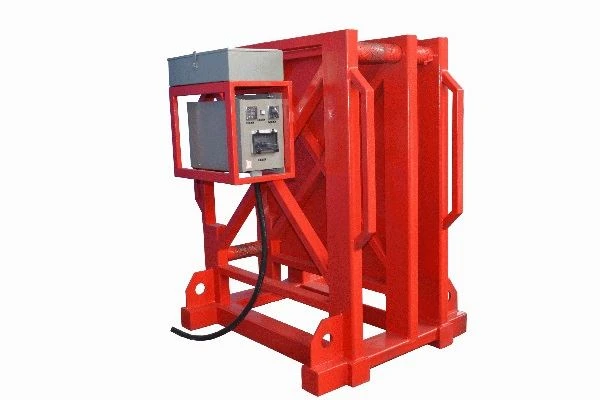
Now, if you're thinking about customizing a pipe butt welding machine, here's what to keep in mind. First, be specific. Don't just say "I need a custom machine"-tell us the pipe diameter, wall thickness, material, where you'll use it, and what's bugging you about standard models. The more details you give, the better we can match the machine to your needs. Second, don't wait until the last minute. Even though lead times are shorter than you might think, custom builds still take time to design and test. If you're in the middle of a project, give us a heads up as soon as possible. Third, don't worry about "it being too much." We've seen every weird request under the sun-from machines that fit through 30-inch doorways to ones that work in freezing cold temperatures. If you have a need, we've probably solved it before, or we can figure it out with you.
A lot of people ask me why customization is so important in this industry. The pipeline world isn't one-size-fits-all-every job has its own challenges, whether it's a residential neighborhood, an offshore rig, or a narrow irrigation ditch. A standard machine might work for one job, but it'll hold you back on the next. That's why being able to customize your equipment isn't a luxury-it's a way to work faster, safer, and with better quality.
If you're tired of fighting with machines that don't fit your pipes or your job site, let's talk. We can walk through your project, figure out exactly what you need, and build a machine that works for you-no generic parts, no unnecessary features, just a tool that gets the job done right. Whether you need a tweak to our Straight Tube Butt Fusion Machine, a custom Butt Weld Pipe Fitting Machine For Hdpe Pipes, or a totally unique build, we've got you covered.