


As a professional supplier of Pe Pipe Fusion Welding Machines, I am often asked whether there are training courses available for operating these machines. In this blog, I will delve into this topic, exploring the necessity of training courses, what kind of courses might be offered, and the significance of well - trained operators for the Pe pipe welding industry.
The Necessity of Training Courses
Pe Pipe Fusion Welding Machines are precision devices that play a crucial role in joining polyethylene pipes. The welding process is not as simple as it may seem. Incorrect operation can lead to a series of problems, such as weak welds, leaks, and even system failures. One of the main reasons is that the fusion welding of PE pipes requires strict control of temperature, pressure, and time. A slight deviation from the optimal parameters can compromise the quality of the weld.
For instance, if the heating temperature is too low, the polyethylene may not melt sufficiently, resulting in a poor bond between the pipes. On the other hand, if the temperature is too high, the material can degrade, reducing its mechanical strength. Moreover, improper pressure application during the welding process can cause uneven joints or internal stresses within the pipe. Therefore, to ensure the safety and reliability of PE pipe systems, it is essential for operators to receive proper training.
Available Training Courses
There are indeed various types of training courses for operating Pe Pipe Fusion Welding Machines. These courses are designed to cover different aspects of the welding process, suitable for beginners as well as experienced technicians looking for advanced knowledge.
Basic Training Courses
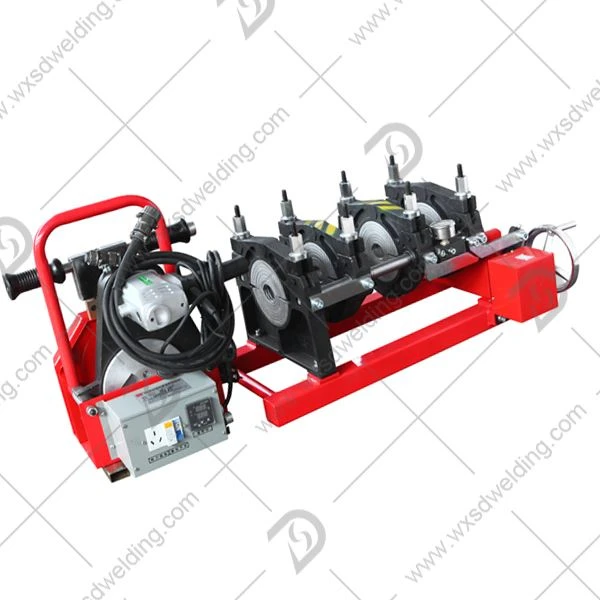
Basic training courses typically focus on the fundamentals. They teach operators about the structure and working principle of Pe Pipe Fusion Welding Machines. For example, they explain how different components of the Pe Hdpe Manual Butt Welding Machine work together to achieve the fusion of pipes. Operators will learn about safety precautions, such as wearing protective gear, handling the welding tools correctly, and avoiding potential electrical or thermal hazards.
In addition, these courses involve hands - on training on pipe preparation. Before welding, pipes need to be cut straight, the surfaces need to be cleaned and beveled properly. Trainees will practice using cutting tools and preparing the pipe ends to ensure a good fit during the welding process. They will also learn the basic steps of setting up the welding machine, adjusting the temperature and pressure settings according to the pipe diameter and material grade.
Advanced Training Courses
Advanced training courses are aimed at those who already have some basic knowledge of Pe pipe welding. These courses go deeper into the technical details. For example, they cover the welding of different grades of PE materials. Different grades of PE have different melting points and flow characteristics, which require different welding parameters. Operators will learn how to adjust the settings of the Plastic Pipes Manual Hydraulic Butt Welding machine based on the specific material properties.
Advanced courses also focus on quality control and inspection techniques. After the welding is completed, it is necessary to inspect the welds to ensure they meet the relevant standards. Trainees will learn how to use non - destructive testing methods, such as ultrasonic testing or visually inspecting the weld bead for signs of defects. They will also analyze common welding defects and learn how to troubleshoot problems that may occur during the welding process.
Role of Training in the Industry
Well - trained operators are the backbone of the Pe pipe welding industry. Pe pipes are widely used in various fields, such as water supply systems, gas distribution networks, and drainage systems. The quality of the welded joints directly affects the performance and safety of these systems.
In the water supply industry, for example, a poorly welded PE pipe can lead to water leakage, which not only wastes precious water resources but also may cause damage to the surrounding infrastructure. In gas distribution networks, the consequences of a faulty weld can be even more severe, as it may lead to gas leaks, posing a significant safety risk. By ensuring that operators are well - trained, the industry can minimize these risks and improve the overall quality of the installed pipe systems.
Our Role as a Supplier
As a Pe Pipe Fusion Welding Machine supplier, we understand the importance of providing support in terms of training. We offer comprehensive training packages for our customers. Our training programs are conducted by experienced technicians who have in - depth knowledge of our products, such as the Manual Butt Fusion Pipe Welding Machine.
We provide on - site training at the customer's location, which allows operators to learn in a practical environment using the actual machines they will be operating. Our training courses are also customizable, depending on the customer's needs and the level of expertise of the operators. Whether it is a large - scale project requiring advanced welding techniques or a small - scale installation for basic water pipes, we can tailor the training to fit the specific requirements.

The Future of Pe Pipe Welding Training
With the continuous development of technology, the Pe pipe welding industry is also evolving. New materials and more advanced welding techniques are emerging. In the future, training courses will need to keep up with these changes.
For example, as smart welding machines equipped with sensors and automation features become more common, training courses will likely include content on how to operate and maintain these smart devices. Operators will need to understand how to interpret the data collected by the sensors to optimize the welding process.
In addition, environmental considerations are becoming increasingly important in the industry. Future training may also cover sustainable welding practices, such as reducing energy consumption during the welding process and proper disposal of waste materials generated during pipe preparation.
Conclusion
In conclusion, there are indeed training courses available for operating Pe Pipe Fusion Welding Machines, and these courses are of great significance for the industry. Whether it is basic training for beginners or advanced training for experienced technicians, they all contribute to improving the quality of welds and ensuring the safety and reliability of PE pipe systems.
As a leading supplier of Pe Pipe Welding Machine for Poly Pipe Welder and Hdpe Pipe Fitting Fusion Welding Machine, we are committed to providing high - quality training services to our customers. If you are interested in our products and training programs, please feel free to contact us for procurement and further discussions. We look forward to working with you to achieve excellent results in your PE pipe welding projects.